
Alleghany County VINE Coverage
Virginia Jail VINE on VINELink covers Virginia local and regional jails. That makes it the relevant notification channel when a person is booked at Alleghany County Regional Jail, which the sheriff often calls Alleghany Regional Jail. The service allows a public name or identifying-number search and registration for reported custody changes. It can give a quick signal after the jail sends an event, but it is not a historical release ledger and the reviewed official guidance does not promise how long an Alleghany released result will remain searchable.
Scope matters. A move from the regional jail to the Virginia Department of Corrections is a transfer, not freedom. VADOC uses a different victim-notification channel for state custody, while its public Inmate and Supervisee Locator serves a separate status-search role. A federal prisoner belongs in the BOP locator, and a person under immigration custody belongs in the ICE custody path. VINELink should not be stretched across those systems.
Search an Alleghany Inmate
Begin with enough information to avoid a same-name match. The person’s full name, middle name, date of birth, and any booking or agency number can help distinguish records. Confirm that the agency shown is the Alleghany regional facility in Covington, Virginia. The similar spelling of Allegheny County, Pennsylvania creates a real wrong-jurisdiction risk, so state and agency checks are essential.
- Open the Virginia state page in VINELink and choose the person-search option currently displayed.
- Enter the name or identifying number. Try accurate name variants if the first query returns no result.
- Compare every available identifier and the reporting agency before opening a match.
- Read the custody status and event type as written. Do not turn “transfer,” “not found,” or another status into “released.”
- Record the query time, event text, and agency, then confirm the event with the jail or other custodian.
A blank result has narrow meaning. It says that the search returned no match at that moment. A spelling issue, update lag, final discharge, transfer, identifier error, or a different custody authority can all produce that outcome. The broader Alleghany County released-inmate search path explains how the jail record, court file, and VADOC status answer different parts of the same question.
Note: Search both local facility names, but accept a result only after the Virginia agency and personal identifiers agree.
Alleghany VINELink Release Fields
VINELink is strongest as an event and notification source. Its exact result wording can change, so the live screen controls. The research supports the fields and interpretations below without inventing a local release code or a fixed archive period.
| Field or clue | What it can establish |
|---|---|
| Name or identifying number | Helps match the right person when read with other identifiers. |
| Reporting agency | Shows which jail or authority supplied the custody event. |
| Custody status | Reports the status currently supplied to VINE, subject to timing and data limits. |
| Custody-change event | May distinguish release, transfer, escape or recapture, or another reported movement. |
| Notification registration | Lets the user select available alert methods for future reported changes. |
A release alert is useful evidence that the jail reported an event. It does not by itself explain the legal authority or destination. The Alleghany LIDS release entry can supply the release date and time, type, authority, and receiving agency. The related court case can explain the bond, dismissal, sentence, or other order. Those records resolve whether the person left custody or merely left one building.
Virginia VINE Release Guidance
The official Virginia VINE FAQ explains the state service and is the best static reference when a live result label or alert option needs context.
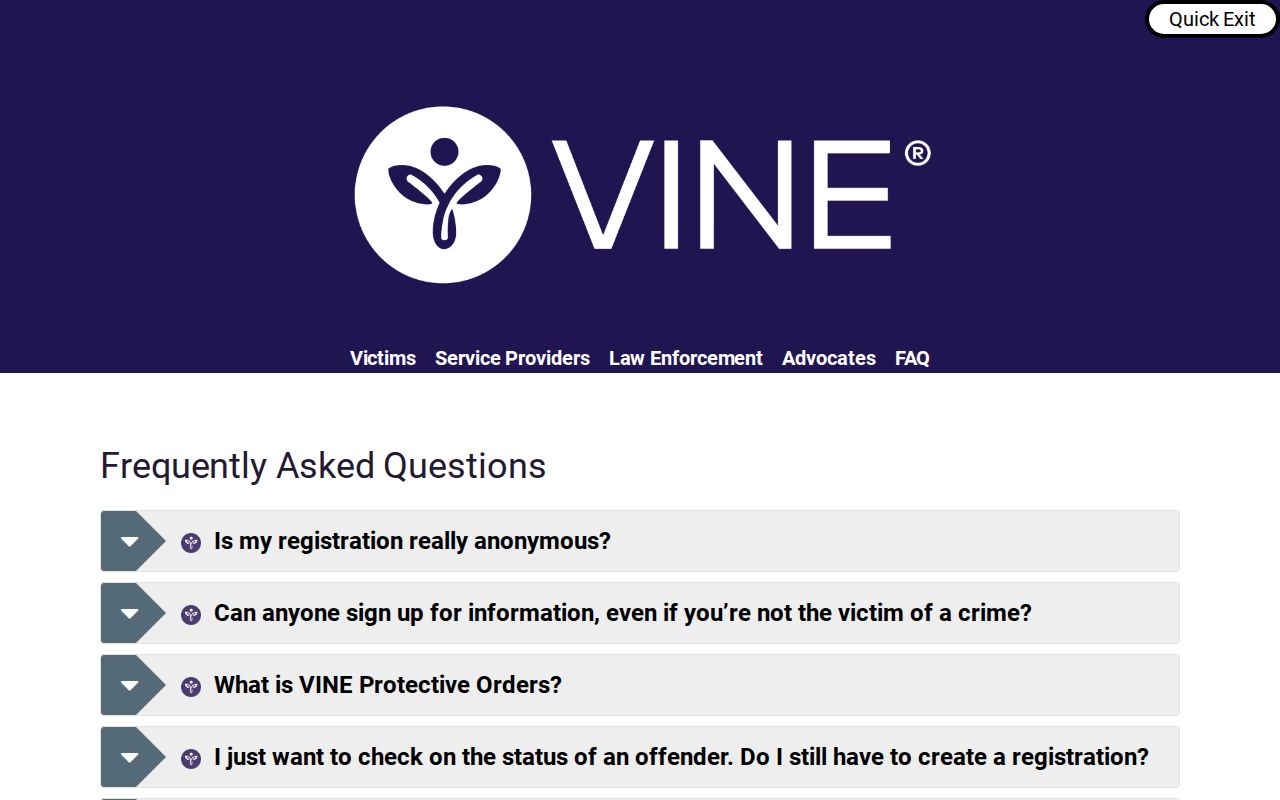
The captured FAQ supports use of VINE for local jail notification. A live Alleghany County record still must be read on its own terms because the static guidance cannot establish a specific person’s status or the age of a result.
Register Alleghany Release Alerts
Registration starts only after the correct person is selected. The current interface may offer phone, text, or email delivery. Use the choices actually shown, enter the destination carefully, and complete the confirmation flow. A phone registration can require a personal identification number, or PIN. When the automated call arrives, entering that PIN acknowledges the alert and stops repeated attempts.
- Open the verified person record and select the available notification option.
- Choose one or more delivery methods shown by the current service.
- Enter the phone number, text destination, or email address and check it for errors.
- Create or enter the requested PIN for telephone alerts and finish all confirmation steps.
- Keep the confirmation in a safe place and update contact details if they change.
Registration is not an emergency service. Call 911 for an emergency, and contact the supplying jail when an identity or custody record appears wrong. VINE can notify; it cannot correct the jail’s source data. A saved alert should also be compared with the later official release or transfer record.
Note: Keep each alert confirmation private, and update the delivery address before an old phone number or email account expires.
Local VINE Versus NAAVI
Virginia’s channel split is crucial after an Alleghany jail movement. Virginia Jail VINE permits public local and regional jail searching and registration. VADOC NAAVI is a different, victim-only notification system for state custody. Eligibility and enrollment rules apply. NAAVI is not an open substitute for the public VADOC locator, and local VINE does not become the state release record merely because a person once passed through the regional jail.
A person sentenced to state time may generate a local transfer event before VADOC receives the person. Treat that notice as a custody-chain handoff. Search the VADOC Inmate and Supervisee Locator after intake, then use the eligible state notification route if it applies. A later VADOC release should be confirmed through state status and release papers, including an Order of Release when available.
Alleghany VINELink Check Limits
VINE receives data from the reporting agency. Updates may lag, and an identifier issue can attach a misleading result or hide a match. Static guidance does not establish the persistence of a released Alleghany record. For those reasons, save the wording and timestamp, then ask the agency that supplied the event for an existing record when proof must last.
The Alleghany jail can answer a present custody question at 540-965-1776, subject to what staff may disclose. A focused request through the sheriff’s records or LIDS function can seek the booking number, release date and time, release type, authorizing order, and destination or receiving agency. If the record says VADOC, another jail, ICE, or the U.S. Marshals, custody continued. If it says bond, recognizance, time served, or sentence completion, review any other hold before concluding that the person entered the community.
Note: A current roster checks who remains held; the release entry and court authority are the better records after custody ends.
Resolve Alleghany VINE Conflicts
When a VINE alert and another source disagree, rank each record by the event it can prove. VINE is a prompt that the supplying agency reported a custody change. The jail movement entry is stronger for the time and type of exit from Alleghany Regional Jail. A court order is stronger for the legal decision in that case, while VADOC release papers control the state-custody event. None should be forced to answer a question outside its scope.
Preserve each source’s words and time. “Released,” “transferred,” “not found,” and “not in custody” do not mean the same thing. A bond order may appear before the jail completes release processing. A local transfer notice may appear before VADOC intake becomes visible. An updated status can properly replace an earlier status without making the earlier alert false at the moment it arrived.
Resolve the conflict with the agency responsible for the disputed step. Ask the jail about departure from the regional facility, the court clerk about the order, and VADOC about state custody or supervision. When the person may have been held for a case from Covington or another locality served by the regional jail, use the arresting agency and case number to locate the correct court. The jail’s Covington address alone does not identify the prosecuting jurisdiction.
Federal Release Checks Differ
VINELink does not track BOP custody. A federally sentenced person should be searched through the BOP Inmate Locator, with the federal court docket used for the judgment and later orders. “Not in BOP custody” can include a status other than unrestricted community release, so read the detail record and court source together. An immigration detainer creates another branch: leaving Alleghany Regional Jail for ICE is a transfer, and the ICE locator applies only when immigration custody is actually indicated.
The clean verification chain is event, authority, and destination. VINELink may supply the local event. The jail record supplies the movement details. The court or receiving agency supplies the legal and custody context. Keeping those roles separate prevents the most serious error in an Alleghany County VINELink release check: mistaking a move between custodians for release from custody.