
Alleghany Parole and Probation Compared
Parole and probation can both place a person under rules in the community, but they begin in different ways. Parole is release from confinement under Virginia Parole Board authority for a sentence that is eligible for parole. Probation generally comes from a court order and may follow confinement or accompany a suspended sentence. A suspended sentence is jail or prison time that the court does not require the person to serve unless specified conditions are broken. Neither term should be inferred from the word “released.” A person may complete a jail term with no supervision, leave on bond while a case continues, or move into another custodian’s control.
Virginia also distinguishes pretrial supervision. It applies while a criminal case is pending and is not probation, parole, dismissal, or sentence completion. For an Alleghany County record, the court order is the best source for probation and pretrial status. The Parole Board documents eligible parole decisions. VADOC administers both state probation and parole in the community.
| Status | Who orders it | What confirms it |
|---|---|---|
| Parole | Virginia Parole Board for an eligible sentence | Board decision, VADOC status, and release paperwork |
| Probation | Sentencing court | Sentencing order and active VADOC supervision record |
| Pretrial supervision | Court before final disposition | Bond order, docket, and pretrial-services record |
| Final discharge | Controlling court or corrections authority | Discharge record, final order, or VADOC response |
Note: A release from Alleghany Regional Jail does not, by itself, prove that parole or probation began.
Check Alleghany Post-Release Supervision
The VADOC Inmate and Supervisee Locator is the first public check because its stated scope includes active probationers and parolees. Search with the seven-digit DOC ID when known. A name search requires at least the first three letters of the first name and the full last name. Location, race, gender, and age range are optional filters. VADOC says the locator updates daily and warns that its data can be inaccurate or out of date, so record the exact status, location wording, and time checked.
A locator match can support the fact of active supervision. It does not explain every court condition, and it is not promised as a permanent archive after supervision ends. The court file remains important for probation. For parole, compare any public Board decision with actual VADOC status because a grant authorizes the release process but does not prove the person walked out that day.
- Search the VADOC locator by DOC ID or carefully matched name and identifiers.
- Read the current status and office or location exactly as displayed.
- Check the Alleghany court order for probation, a suspended term, or pretrial status.
- For parole, review the official Board decision report and then confirm the later VADOC custody event.
- Use District 40 for current reporting directions or a permissible status clarification.
For a fuller custody and release trace, the Alleghany County released-inmate search explains how the local jail record, VINE event, VADOC record, and court case fit together.
Alleghany Supervision Starts at District 40
Alleghany County is not served by a county-named probation and parole office. The official VADOC facilities and offices directory assigns the area to Fincastle Probation and Parole, District 40. Its listed service territory includes Alleghany County, Covington, Clifton Forge, and Iron Gate. That regional structure matters. A released person should not assume there is a reporting storefront in Covington merely because the case or jail stay was local.
The office can confirm current reporting instructions to the extent permitted, but it may not disclose private supervision details to a caller. Use public records for facts they are meant to prove. The court order establishes probation terms, the Board record documents a parole decision, and VADOC maintains supervision. Leadership names can change, so they should be read from the current state directory rather than treated as a fixed part of the release record.
Fincastle Probation & Parole, District 40
20 South Roanoke Street
Fincastle, VA 24090
Phone: 540-473-2056
The successful manifest capture comes from the official District 40 directory source.
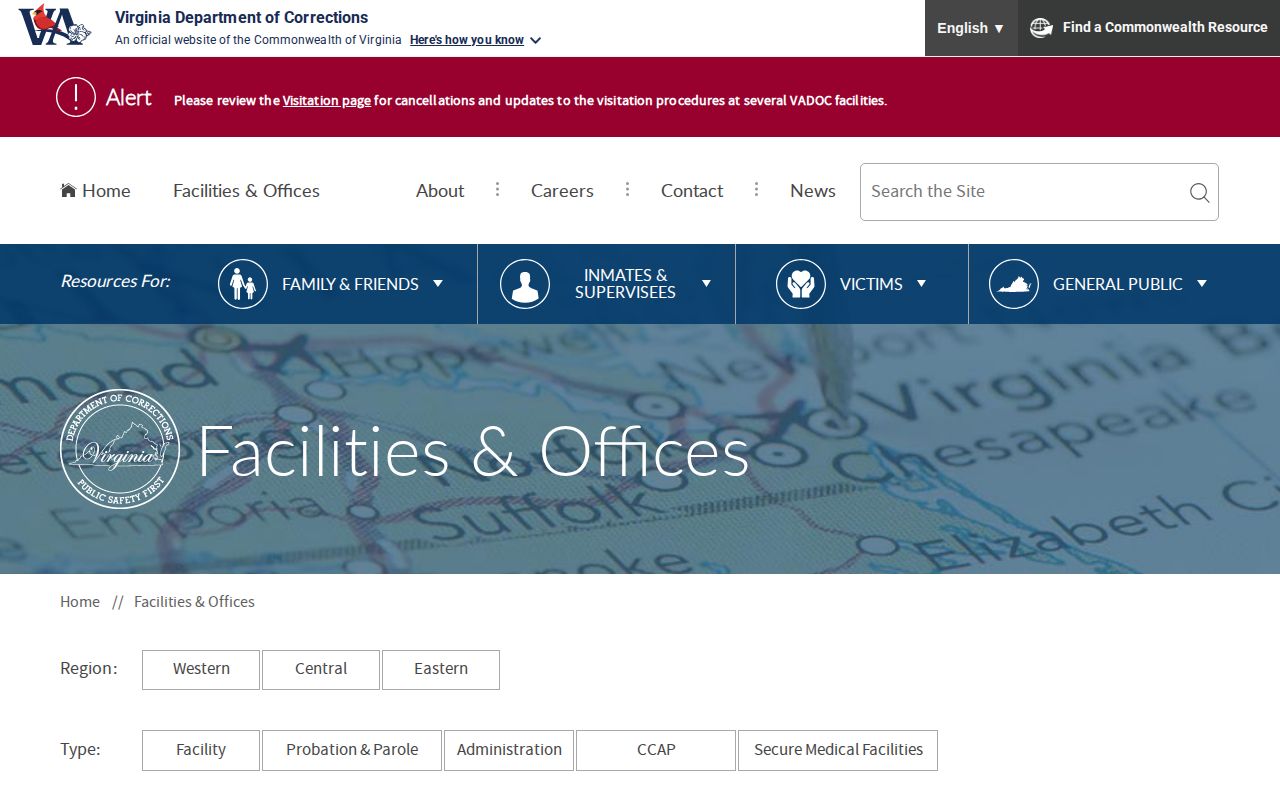
The directory is the right place to verify the regional office before a report, visit, or call.
Alleghany Parole Decisions and Release
The Virginia Parole Board decision reports are monthly PDFs arranged by year and month. Depending on the report, entries may include a person’s name, DOC number, case type, decision or certification date, jurisdiction, offenses, sentence facts, reasons, votes, and an outcome. Read the selected document rather than assuming each report has every field. The Board also posts event-based public meeting notices, agendas, access information, and archived minutes.
A meeting listing means the matter is scheduled. It does not mean parole was granted. A grant means the Board authorized parole subject to certification, accepted conditions, and VADOC processing. Actual departure from secure custody must be confirmed through the VADOC status and signed release documents. Virginia generally abolished discretionary parole for felony offenses committed on or after January 1, 1995, but § 53.1-165.1 has exceptions. Offense date alone is not enough to decide eligibility.
Alleghany Supervision Violations and Warrants
Conditions are the rules imposed by the court, Parole Board, or supervising authority. They vary by case. A suspected breach may lead to a violation process, a warrant, arrest, or a hearing, but an allegation is not the same as a final finding. An absconder is a person alleged to have stopped reporting or left supervision without approval. That label may show why authorities seek the person, yet it does not erase the earlier fact that secure custody ended.
VADOC has a statewide Most Wanted channel, but the research found no Alleghany-specific sheriff absconder list. Current safety or warrant concerns belong with law enforcement and the correct court. Old news and copied entries cannot confirm that a warrant remains active. Virginia Jail VINE is useful for local-jail custody changes, not for a complete history of probation violations. If a supervisee is jailed again, confirm the new holding authority and case rather than assuming a prior parole or probation term ended.
- Absconder
- A supervisee alleged to have stopped reporting or left approved supervision.
- Violation
- An alleged failure to follow a supervision condition; a hearing or court process may follow.
- Detainer
- A request or authority that can keep custody in place for another agency.
- Discharge
- The formal end of custody or supervision under the controlling authority.
Note: Use a current official source for warrant status, and contact law enforcement if immediate safety is at issue.
Alleghany Release or VADOC Transfer
The Alleghany sheriff’s local inmate information says property will not be accepted for a person transferring to a state facility. That detail is a useful custody clue. A person who disappears from local custody may have entered VADOC rather than returned to the community. Ask the jail whether the movement was a discharge or transfer and request the receiving agency when it can be released.
An incorrect identity or disposition entry calls for a different route than an ordinary records request. Virginia Code § 9.1-132 provides an own-record challenge process for covered criminal-history information. FOIA seeks an existing public record; an accuracy challenge asks the proper authority to review an alleged error in the person’s own official record. Preserve the exact disputed wording and source before contacting the agency.
Confirm Alleghany Supervision Discharge
Community supervision ends through the controlling legal and administrative process, not simply because a name no longer appears in a search. A final court order may close probation. VADOC may maintain a discharge record for state supervision. If a former supervisee drops from the locator, the stated scope does not promise a lasting public history of that person, so absence alone cannot supply the end date or reason.
Request the existing discharge record or final order when proof must persist. Include the person’s full recorded name, date of birth if known, DOC number, court case number, and approximate period of supervision. Ask for the discharge date and authority as maintained. Keep parole, probation, local-jail release, and prison discharge records separate. Together they can show the full sequence from confinement to community supervision and, at last, release from supervision.
Victim notification also follows the custody system. Virginia Jail VINE covers local and regional jail events, while VADOC’s NAAVI program is a separate victim-only state channel. Neither public notification nor enrollment replaces the discharge document. A VINE transfer alert may mark the end of the local jail stay and the start of state custody. NAAVI may distinguish an anticipated state release notice from an actual release notice. When supervision is the question, use the court, Board, and VADOC records rather than turning a custody alert into a supervision status.